

Biodiversity, Chemicals, Ecosystems, Ethical Living, Garden, Plastic Packaging, Style, Sustainability, Uncategorised, Uncategorized, Wildlife
Household Uses for Sodium Carbonate (Washing Soda)
Apr
What is Sodium Carbonate? Na₂CO₃
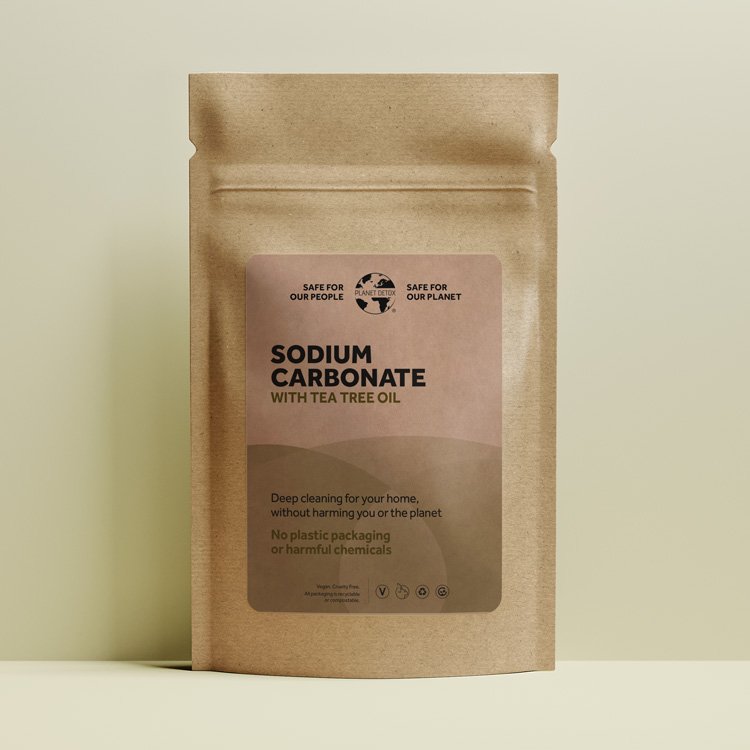
Sodium carbonate is a natural cleaning powder often called washing soda. It looks a bit like baking soda but is stronger. It’s made from salt and chalk and has been used for generations to clean clotes, surfaces, and even unclog drains. It’s completely natural, doesn’t contain any harmful chemicals and is great for lifting grease, softening hard water and getting rid of bad smells.
Ways to use –
1. Laundry Booster
Sodium carbonate helps soften water, allowing detergent to work more effectively. Add a tablespoon to your laundry to boost cleaning power and help remove tough stains and odors.
2. Stain Remover
Make a paste with water to tackle grease, blood, wine, and other stubborn stains on fabrics before washing. Always test on a small area first.
3. Grease Cutter
Perfect for cleaning greasy stovetops, oven hoods, or BBQ grills. Dissolve a few tablespoons in hot water and use it to cut through built-up grime.
4. Hard Surface Cleaner
Use it to clean sinks, tubs, tiles, and countertops (avoid on aluminum and delicate surfaces). It’s especially effective in bathrooms and kitchens.
5. Dishwasher Cleaner
Run an empty dishwasher with a scoop of washing soda to remove limescale, soap scum, and odors.
6. Toilet Bowl Cleaner
Pour about half a cup into the toilet bowl, let it sit for 30 minutes, then scrub and flush. It helps break down stains and deodorizes naturally.
7. Floor Cleaner
Dissolve in warm water to mop tile, vinyl, or stone floors. Great for lifting dirt and leaving a clean surface (again, avoid wood or waxed floors).
8. Deodoriser
Sprinkle it in garbage bins, drains, or even shoes to help neutralize unpleasant odors.
9. Drain Unclogger
Pour 1/2 cup down the drain followed by hot water to help break up greasy buildup. For extra power, combine with vinegar (expect fizzing!).
10. Garden Pest Control
When used sparingly and carefully, it can deter pests like aphids. Always research appropriate usage before applying to plants.
